


RELIGION/BELIEF
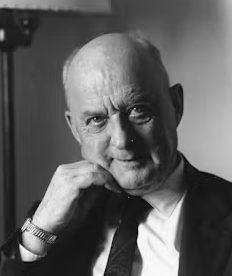
YOU’RE PROBABLY FAMILIAR WITH THE SERENITY PRAYER—BUT DO YOU KNOW ITS ORIGINS?
The Serenity Prayer became widely known through Alcoholics Anonymous, but it was originally penned by Reinhold Niebuhr, one of the most influential theologians of the 20th century.
I can’t recall exactly when I first came across the Serenity Prayer or when I started wondering about its origins. For much of my life, it never crossed my mind that prayers—especially ones as well-known as this—were actually written by someone.
"God grant me the serenity to accept the things I cannot change, the courage to change the things I can, and the wisdom to tell the difference."
This simple yet profound message has appeared on everything from keychains and coffee mugs to tattoos and tea towels. Many people associate it most closely with 12-step recovery programs like Alcoholics Anonymous, where it serves as a reminder of both human limitations and the power to overcome them.
However, the prayer was originally composed by American theologian Reinhold Niebuhr. For him, it was more than just a comforting phrase—it was a call to face life’s challenges with courage, leaning not on personal strength alone but on divine grace.
Over time, the Serenity Prayer has often been mistakenly credited to various Christian figures, including Thomas Aquinas, Augustine, and Francis of Assisi. Many may be surprised to learn that, rather than originating in an ancient European monastery, the prayer was actually written less than a century ago in a small cottage in western Massachusetts.
Reinhold Niebuhr, its author, was born in Wright City, Missouri, to a German American pastor. Following in his father’s footsteps, he became a pastor himself, leading a congregation in Detroit before transitioning to academia. He later moved to New York, where he taught at Union Theological Seminary and gained prominence as a theologian, activist, and social critic. His family was deeply rooted in theological scholarship—his brother, H. Richard Niebuhr, was a renowned ethicist and theologian, and his sister, Hulda, also made significant contributions to the field.
Today, Reinhold Niebuhr is widely recognized as a founder of “Christian realism,” an ethical framework that acknowledges the tension between humanity’s moral aspirations and its inherent limitations. As I explore in my book, The Niebuhr Brothers for Armchair Theologians, this perspective emphasizes that while people should strive for their highest ideals, they must also confront the reality that perfection is unattainable.
This theme is central to one of his most influential works, Moral Man and Immoral Society, where Niebuhr argues that while individuals can sometimes act out of pure love and selflessness, groups and societies are ultimately driven by self-interest. As a result, societies can never fully embody love—at best, they can achieve justice, which serves as an imperfect but necessary substitute.
Niebuhr’s ideas had a profound impact on politics, attracting admirers among liberal leaders such as Arthur Schlesinger and former Vice President Hubert Humphrey. While some of his followers had little interest in his religious beliefs—jokingly referring to themselves as “atheists for Niebuhr”—they deeply valued his insights on human nature and social justice.
So how did Niebuhr come to write this prayer?
His daughter, Elisabeth Sifton, provides insight in her book The Serenity Prayer. She recalls that Niebuhr first composed the lines for a worship service near their summer home in Heath, Massachusetts, when she was a child. Later, he contributed a version of the prayer to a prayer book for soldiers heading off to fight in World War II. From there, it gradually found its way into Alcoholics Anonymous and eventually became the widely recognized meditation it is today.
Niebuhr, according to Sifton, did not believe prayers should be copyrighted and never sought to profit from the Serenity Prayer’s widespread popularity. However, friends often gifted him with various Serenity Prayer-themed items, such as wood carvings and needlework.
Interestingly, the version most people recognize today differs slightly from Niebuhr’s original wording. His first version, as Sifton recounts, read: "God, give us the grace to accept with serenity the things that cannot be changed, the courage to change the things that should be changed, and the wisdom to distinguish the one from the other."
Though subtle, these differences carry deep significance, reflecting key themes in Niebuhr’s philosophy. He prayed not just for serenity, but for grace. He did not ask for the courage to change what merely can be changed, but rather what should be changed.
Most notably, the prayer was originally a collective request—"grant us," rather than "grant me." This aligns with Niebuhr’s belief that while individuals may achieve the highest moral ideals, true societal change requires collective action in the pursuit of justice.
"This represents a significant development in our ongoing coverage of current events."— Editorial Board