


RELIGION/BELIEF
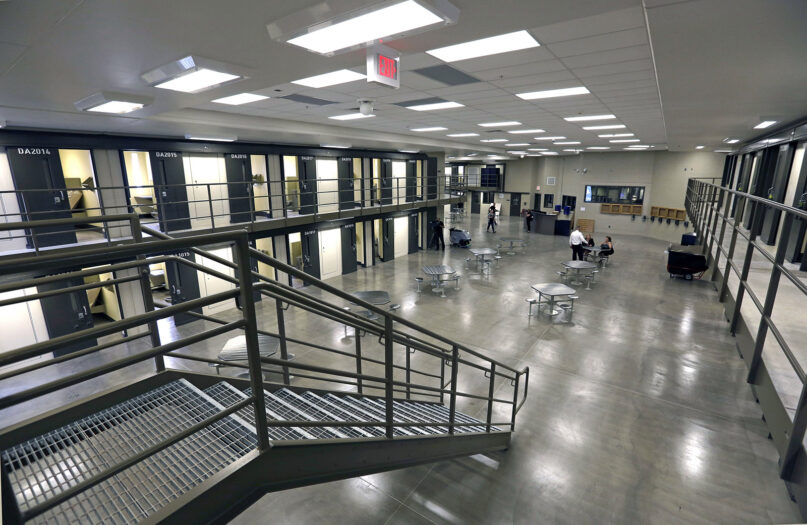
MUSLIM ADVOCATES EMPHASIZE THAT **RAMADAN BEHIND BARS** SHOULD BE A SACRED TIME FOR REFLECTION AND WORSHIP, NOT A STRUGGLE FOR RELIGIOUS RIGHTS.
(RNS) — From being denied the ability to break fast at the proper times to restrictions on gathering for Eid al-Fitr, the celebration marking the end of Ramadan, incarcerated Muslims often find themselves fighting legal battles to uphold their religious rights during the holy month.
(RNS) — For Muslims, Ramadan is a time for spiritual growth, deepening knowledge of Islam, and breaking fast with loved ones at sunset. However, for incarcerated Muslims, the holy month can be fraught with frustration, as prison schedules often fail to accommodate Ramadan’s daily rituals.
Those observing the monthlong fast—abstaining from food and water between sunrise and sunset—frequently face obstacles, such as being forced to break their fasts outside permitted hours or being denied the right to gather for Eid al-Fitr, the celebration marking the end of Ramadan. Instead of focusing on their faith, many spend the month fighting legal battles to secure their religious rights.
The Council on American-Islamic Relations (CAIR), the largest Muslim advocacy group in the U.S., reports a spike in complaints from incarcerated Muslims during Ramadan. According to Corey Saylor, CAIR’s research and advocacy director, these issues often stem from a lack of consideration for non-Christian inmates, driven by ignorance or, in some cases, outright discrimination.
"Some of these cases are rooted in anti-Muslim bias, while others stem from a lack of understanding of the faith," said Saylor. However, he noted that it is difficult to determine how many cases result from deliberate attempts to restrict religious practice versus ignorance.
In Virginia, some inmates have been denied the right to fast unless they declared their intent four months in advance. This policy created hardships, including for one inmate who converted to Islam just a month before Ramadan, forcing him to choose between starving himself or violating his sincerely held religious beliefs, Saylor explained.
Though Muslims comprise only about 1% of the U.S. population, they make up 9% of the prison population, with approximately 11,000 Muslims incarcerated in federal prisons alone. Despite this growing number, American prisons lack enough qualified chaplains to support Muslim inmates and advocate for their religious rights. CAIR compiles a guide on Islamic religious practices and distributes it annually to prison administrators ahead of Ramadan to remind them of their obligations toward Muslim inmates, Saylor explained. The 16-page document outlines key aspects of Islamic faith, including daily prayers, the necessity of prayer rugs, religious attire, and other essential practices. Support is also available to help prisoners observe Ramadan. The Tayba Foundation, a nonprofit organization, provides religious education, reintegration programs, and support for inmates and their families across all 50 states, serving over 1,000 facilities.
Muhammad Amin Anderson, a Tayba instructor, joined the organization last summer after completing a 33-year sentence in a Pennsylvania federal prison. Having converted to Islam at 22, he deepened his knowledge through Tayba’s educational materials. Now, Anderson not only trains non-Muslim chaplains on Islamic practices but also assists inmates with parole applications and their transition back into society.
Anderson emphasized that many issues regarding religious accommodations could be prevented if more Muslim chaplains were present in prisons. Inmates are often left to navigate these challenges alone, relying on correctional staff who may be hesitant or uninformed about their religious needs.
“Increasing the number of Muslim chaplains would simplify the process,” Anderson said. “It would allow trained chaplains to handle Ramadan preparations and religious inquiries, rather than placing that responsibility on incarcerated individuals, who are often met with skepticism.”
The need for Muslim chaplains is even greater in rural areas, where religious diversity among correctional staff is often lacking, making it even more difficult for inmates to receive proper accommodations.
Salahuddin Muhammad, vice president of the Corrections Department for the Association of Muslim Chaplains, noted that many potential chaplains are reluctant to join the field due to misconceptions about prison work being unsafe.
Muhammad, who primarily serves at FCI Butner, a federal correctional complex in North Carolina, acts as a liaison between prison staff and inmates. During Ramadan, he frequently reminds staff of their obligations regarding inmates' religious rights, while also mediating issues such as whether medically vulnerable inmates can fast, given that medication schedules often conflict with fasting hours.
“In Islam, there are exemptions for those who are ill—they don’t have to fast,” Muhammad explained. “So, I discuss these allowances with them. That’s often the biggest issue during Ramadan.”
"This represents a significant development in our ongoing coverage of current events."— Editorial Board